Posted on May 29, 2026 | 7-8 min read
Executive Summary
The world of work is evolving at an unprecedented pace. HR leaders stand at a strategic inflection point—tasked with driving transformation while safeguarding fairness and human connection. At the SEAP CHRO Roundtable, senior leaders from GCCs, startups, and HR tech innovators shared how AI is moving beyond experimentation to become a cornerstone of enterprise HR strategy.
With 60% of organizations already deploying AI and 92% planning to scale investments, the question is no longer if AI will transform HR, but how quickly, responsibly, and humanely this change will unfold
AI Across the Talent Lifecycle: From Efficiency to Experience
AI now permeates every stage of HR—sourcing, hiring, learning, engagement, and performance management. Recruitment automation accelerates hiring, AI-driven learning tools personalize development, and sentiment analytics deepen engagement insights.
Key Actions:
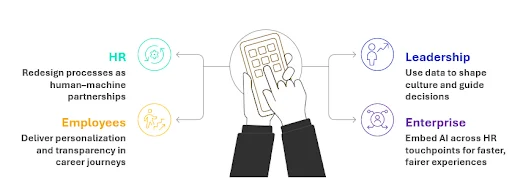
- HR: Redesign processes as human–machine partnerships.
- Leadership: Use data to shape culture and guide decisions.
- Employees: Deliver personalization and transparency in career journeys.
- Enterprises: Embed AI across HR touchpoints for faster, fairer experiences.
Examples from the Dialogue:
- UST cut interview rounds from 6–7 to 3–4 using AI-enabled assessments, boosting efficiency without compromising quality.
- Zyvkascaled candidate screening from 50 to 5,000 per day through voice-based AI agents, maintaining human oversight.
- Xoriant deployed a “mood-o-meter” for real-time sentiment tracking, enabling proactive engagement strategies.
- FIS piloted AI-driven skill management to recommend personalized learning paths.
- Icertis uses AI to create SMART goals, enhancing performance transparency.
The Evolving Role of the CHRO: From Partner to Business Advisor
CHROs are redefining their roles—moving from traditional people partners to AI-enabled business advisors who connect technology, data, and strategy across the enterprise. Today’s CHROs not only drive AI strategy but also lead organizational change, shaping the future of work.
Key Actions:
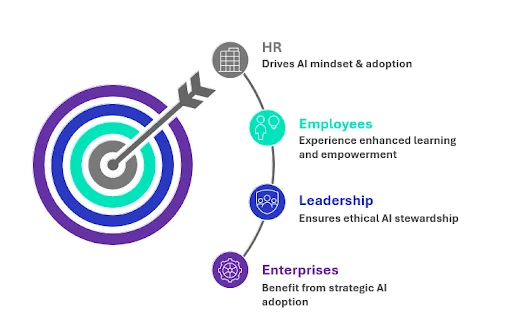
- HR: Build an AI mindset within HR—act as translators between people and technology.
- Leadership: Champion ethical stewardship of AI at the leadership level.
- Employees: Enhance employee experience, learning, and empowerment through HR-driven innovation.
- Enterprises: Position HR as a strategic co-owner of AI adoption across the enterprise.
Examples from the Dialogue:
- FIS and Sailpointspotlighted HR’s transition from business partner to business advisor, emphasizing strategic influence.
- CloudMoyolaunched AI-powered Tech Fests and Hackathons, transforming bottlenecks into breakthrough use cases that drive efficiency and innovation.
- Icertis showcased the CHRO’s pivotal role in championing organization-wide AI adoption and cultivating a culture of experimentation, learning from failure, and continuous development.
Responsible AI & Change: Balancing Speed with Trust
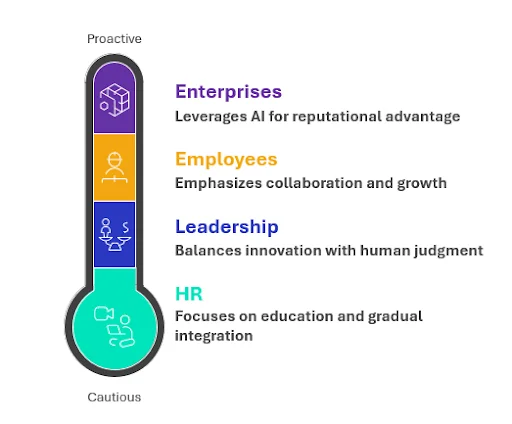
AI introduces significant risks—bias, privacy, and trust—that demand intentional design and robust governance. Successful adoption hinges on balancing agility with responsibility.
Key Actions:
- HR: Build comfort with AI through pilots and targeted education; track adoption as a learning metric.
- Leadership: Balance innovation with human oversight in leadership decisions.
- Employees: Co-create systems with employees that foster growth rather than replacement.
- Enterprises: Treat responsible AI as a reputational strategy at the enterprise level.
Examples from the Dialogue:
- Automate repetitive workflows using AI, as demonstrated by Icertis and CloudMoyo, to free HR teams for strategic initiatives.
- Form cross-functional AI team as Icertis, FIS & Xoriant did, to align HR and business decisions and ensure oversight.
- Prioritize fairness, explainability, and continuous oversight to build sustainable, trustworthy AI systems as does Defence Institute of Advanced Technology.
Future Skills & Readiness: Building the Workforce of Tomorrow
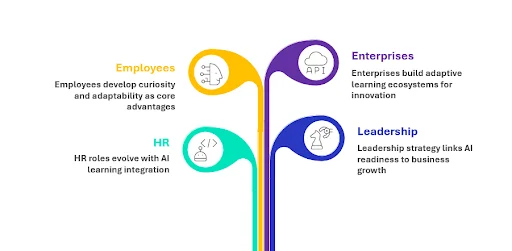
With 44% of skills projected to change within five years, organizations must blend digital fluency with human judgment and prepare for emerging roles.
Key Actions:
- HR: Make AI learning an integral part of every HR role.
- Leadership: Link AI readiness directly to business growth in leadership strategy.
- Employees: Cultivate curiosity and adaptability among employees as core advantages.
- Enterprises: Build adaptive learning ecosystems that reward innovation across the enterprise.
Examples from the Dialogue:
- Launch ‘AI-for-all’ literacy programs and hackathons, as Xoriant did, to foster innovation and adaptability.
- Redefining new roles and relooking at the job architecture and skills such as AI Product Manager and AI Architect, following UST and HMH’s lead.
- Integrate LinkedIn Learning into role-based AI learning paths, as practiced by Icertis, CloudMoyo, and HMH.
Key Takeaways for the Future of Work:
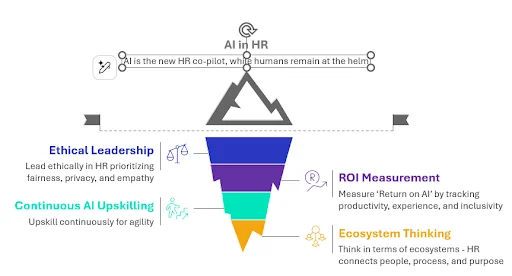
- Position AI as the new HR co-pilot—while humans remain at the helm.
- Lead ethically in HR, prioritizing fairness, privacy, and empathy as non-negotiable.
- Measure ‘Return on AI’ by tracking productivity, experience, and inclusivity.
- Upskill continuously—learning agility will outpace technical expertise.
- Think in terms of ecosystems, not departments—HR connects people, process, and purpose.