Skills, mindset, and what has changed in an AI-native industry
Posted on May 15, 2026
| Event | Academia Connect Session |
| Host | Saama Technologies |
| Venue | Pune Campus |
| Date | May 5, 2026 |
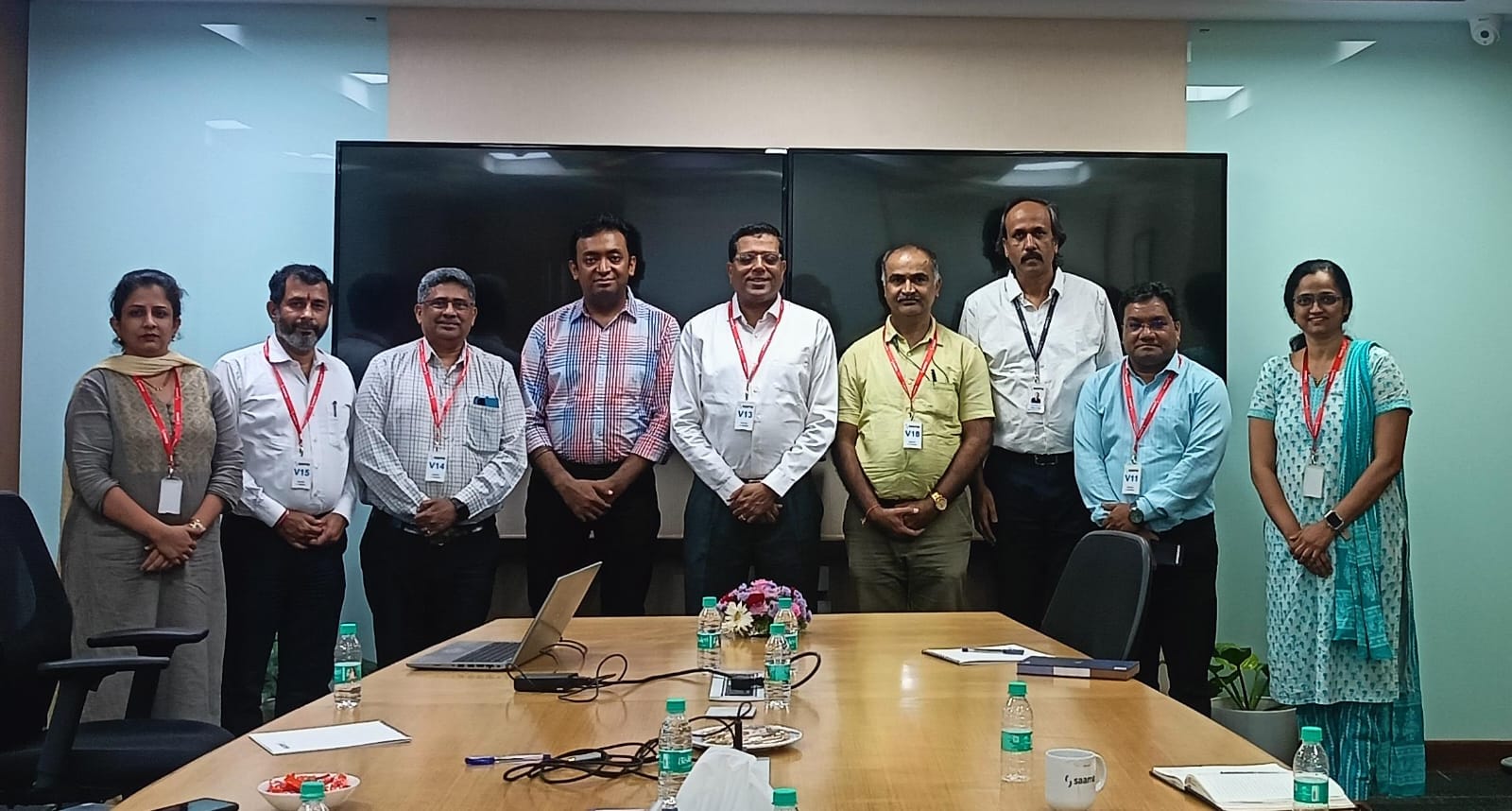
The software engineering world is changing faster than traditional education models were built to handle. A recent academia connect session, hosted by Saama Technologies at Pune Campus, brought together faculty members and industry practitioners to discuss how the role of the software engineer is being reshaped by generative AI, large language models, agentic workflows, cloud-native delivery, and higher expectations from new graduates.
The central message was clear: the modern software engineer is no longer just a code writer. They are expected to become an AI-enabled builder, a full-stack problem solver, a communicator, and an owner of outcomes.
From Coding Tasks to Outcome Ownership
Until recently, many new graduates entered the industry by contributing to specific modules or well-defined features under senior guidance. Work was often divided across development, quality assurance, operations, and deployment teams. The expectation was to write code, complete assigned tasks, and hand off work to the next team.
That model is changing quickly. Engineering teams now work in agile, cloud-native, AI-augmented environments where development, testing, deployment, monitoring, and feedback loops happen continuously. New graduates are increasingly expected to understand the complete application lifecycle and contribute beyond narrow task execution.
The shift is from “write code and hand it off” to “own the outcome end to end.”
AI Is the New Baseline, but Judgment Is the Differentiator
Generative AI and LLM-based tools have changed the baseline expectation from every engineer. AI can generate boilerplate code, assist with debugging, create test cases, summarize documentation, suggest designs, and accelerate analysis. This can significantly improve productivity, but it also changes what companies expect from entry-level talent.
The real skill is not simply using AI. The real skill is knowing what to ask, how to validate the output, how to identify incomplete or insecure responses, and how to integrate the result into a reliable solution.
AI-generated output can look convincing even when it is wrong. That makes critical thinking, validation, testing, and engineering discipline more important, not less.
The Rise of Agentic Development
The next major shift is agentic development. Traditional software delivery followed a sequential path: requirements, design, coding, testing, deployment, and support. In an agentic development lifecycle, AI agents can assist across multiple stages of this workflow.
Agents are beginning to support code generation, code review, refactoring, test generation, deployment, infrastructure provisioning, monitoring, incident response, and even data pipeline management. Engineers will increasingly define intent, orchestrate AI agents, review outputs, and steer systems toward the right outcome.
This does not remove the engineer from the process. It changes the engineer’s role from manual executor to orchestrator, reviewer, decision-maker, and accountable owner.
The New Skill Stack for Graduates
The skill stack expected from new graduates is expanding beyond traditional programming. Core engineering fundamentals still matter, but they now need to be combined with AI fluency, product thinking, and delivery discipline.
- AI and LLM literacy: using generative AI for code, analysis, documentation, debugging, and solution exploration.
- Prompt engineering: instructing AI systems clearly, iterating on prompts, and converting vague requirements into useful AI-assisted outputs.
- Agentic workflows: understanding how AI agents can support development, testing, deployment, monitoring, and operations.
- Cloud and DevOps: working with cloud platforms, containers, CI/CD pipelines, infrastructure-as-code thinking, and release discipline.
- Data fluency: understanding SQL, APIs, analytics, visualization, and data-driven decision-making.
- Full-stack development: building across frontend, backend, database, integration, deployment, and monitoring layers.
- Security and quality: applying cybersecurity awareness, testing discipline, secure coding practices, and code review habits from day one.
Human Skills Are Now Core Engineering Skills
As AI handles more routine technical tasks, human capabilities become a sharper differentiator. Communication, critical thinking, collaboration, ownership, and adaptability are not secondary skills. They are core engineering skills.
Engineers must be able to explain technical decisions to non-technical stakeholders, collaborate across functions, present tradeoffs, ask better questions, and handle ambiguity. They must also learn continuously, because the tools and methods they use today may change multiple times over their careers.
The best graduates will not be the ones who know the most tools. They will be the ones who can learn fast, think clearly, validate their work, communicate effectively, and take responsibility for outcomes.
Where New Graduates Often Struggle
The discussion also highlighted common readiness gaps seen in new graduates. These gaps are not criticisms of academia. They are opportunities for stronger alignment between what students learn and what the industry now expects.
- Theory-to-practice gap: students often understand concepts but struggle to apply them to messy real-world problems.
- Professional AI usage gap: many students use AI casually, but not as a systematic engineering tool with validation and accountability.
- Communication gap: graduates may struggle to explain technical choices, tradeoffs, and constraints to stakeholders.
- Collaborative development gap: version control, code reviews, shared codebases, feedback handling, and CI/CD are often under-practiced.
- Ambiguity gap: real problems rarely arrive with perfect specifications, so graduates need to scope, clarify, and structure problems independently.
The Opportunity for Academia and Industry
The gap between academia and industry is not a criticism. It is an invitation to collaborate. The opportunity is to help students become not only employable, but ready to contribute in modern engineering environments.
A few areas stand out for stronger collaboration:
- Integrate AI, LLM tools, prompt engineering, and agentic workflows into the core curriculum, not only as electives.
- Increase project-based learning that mirrors real development practices, including Git, code reviews, CI/CD, documentation, demos, and retrospectives.
- Make communication part of engineering assessment through technical writing, stakeholder presentations, problem-framing, and solution tradeoff discussions.
- Create industry-style learning experiences through guest lectures, workshops, internships, live projects, hackathons, and curriculum advisory inputs.
- Encourage students to build portfolios with Git repositories, demos, documentation, certifications, and applied project evidence.
Closing Thought
The future software engineer will not be defined by how much code they can write manually. They will be defined by how well they understand problems, use AI responsibly, validate outputs, communicate clearly, and own outcomes end to end.
Preparing students for this future requires a stronger bridge between academia and industry. When both sides collaborate with intent, students become more confident, institutions produce more industry-ready graduates, and organizations benefit from stronger early-career talent.
Attendee list
- Ankit Mittal – SAAMA/SEAP
- Amod Deshpande – SEAP
- Yogesh Deshpande – MMCOE, Pune
- Sanket Kurdukar – Symbiosis, Pune
- Bhushan Nikam – Indira
- Vikas Kishore – Samma
- Dipali Joshi – VIT, Pune
- Surabhi Kakde – VIT, Pune
- Prakash Kshirsagar – International Institute of Information Technology, Pune